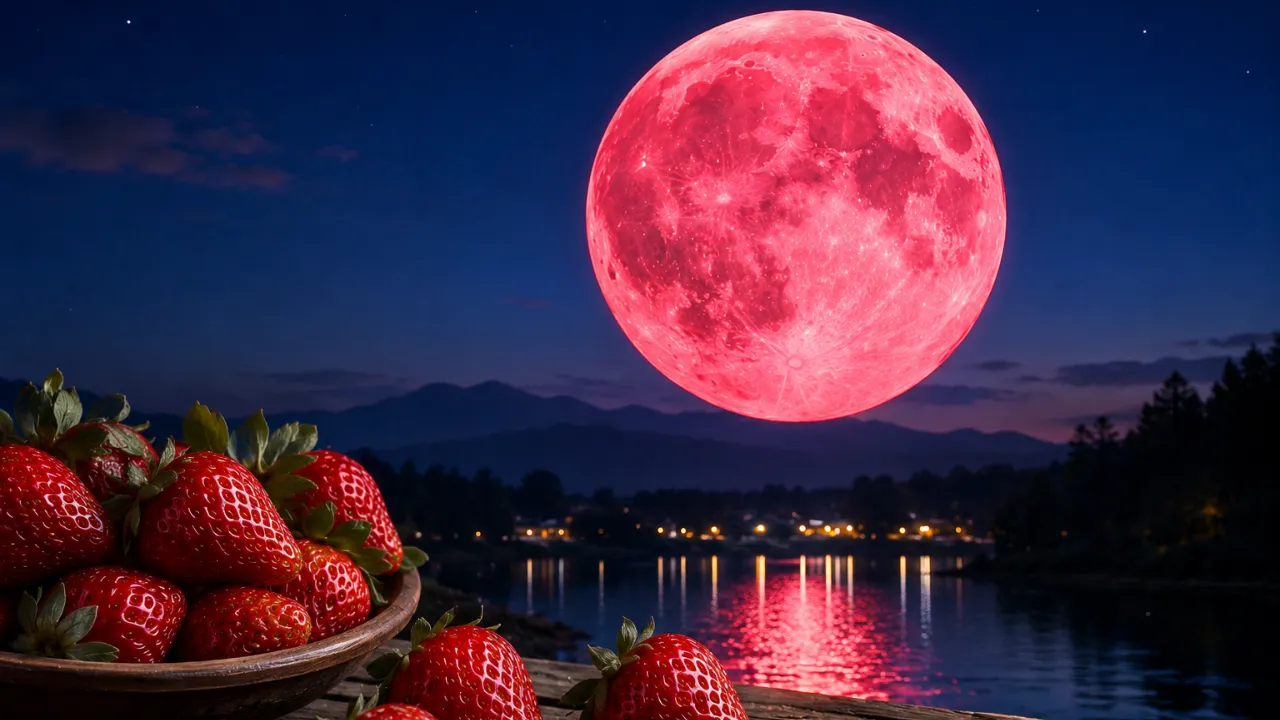
How to Watch the Full Moon
Every year, skywatchers eagerly wait for one of the most beautiful lunar events—the Strawberry Moon. The full moon of June has fascinated people for centuries because of its cultural history, seasonal importance, and stunning appearance after sunset. Although the moon does not actually become pink or red like a strawberry, its warm golden glow near the horizon often creates an unforgettable view.
If you are planning to observe the Strawberry Moon 2026 in Pakistan, this guide explains everything you need to know, including the expected date, Pakistan time, scientific background, visibility, and useful viewing advice. Whether you are a photography enthusiast, astronomy lover, or simply enjoy watching the night sky, this article provides complete and easy-to-understand information.
Strawberry Moon 2026 Pakistan Date and Time
The Strawberry Moon 2026 will occur on Tuesday, 30 June 2026.
Expected Peak Time in Pakistan
| Event | Details |
|---|---|
| Full Moon Date | 30 June 2026 |
| Day | Tuesday |
| Peak Time (Pakistan Standard Time) | Around 2:56 PM PKT |
| Best Viewing Time | Shortly after sunset |
| Moon Visibility | Entire evening, weather permitting |
Although the moon reaches its full phase during the afternoon in Pakistan, it will appear completely full after sunset, making the evening the ideal time for observation.
What Is the Strawberry Moon?
The Strawberry Moon is the traditional name given to June’s full moon. Contrary to popular belief, the moon is not named because of its colour. Instead, the name comes from the short strawberry harvesting season observed by several Native American communities.
As summer begins in many parts of the Northern Hemisphere, wild strawberries become ready for picking. Over time, the name became widely accepted in astronomy calendars and is now recognized around the world.
Today, millions of people search for the Strawberry Moon every year because it is one of the most popular full moons on the lunar calendar.
Why Is It Called the Strawberry Moon?
The origin of the name dates back hundreds of years.
Many Native American tribes used the moon to track seasonal changes instead of modern calendars. Since wild strawberries ripened during June, they referred to this full moon as the Strawberry Moon.
The title later spread through historical farming calendars before becoming popular internationally.

Despite its sweet name, the moon usually appears:
- Golden near the horizon
- Bright white higher in the sky
- Occasionally orange because of atmospheric conditions
- Larger during moonrise due to the Moon Illusion
Its colour depends entirely on Earth’s atmosphere rather than the lunar surface itself.
Different Names Used Around the World
Various cultures have assigned their own names to June’s full moon based on seasonal traditions and agriculture.
Some well-known names include:
- Rose Moon
- Honey Moon
- Mead Moon
- Hot Moon
- Blooming Moon
- Horse Moon
- Planting Moon
Each name reflects local history, farming practices, or weather conditions rather than changes in the moon itself.
Scientific Facts About the Strawberry Moon
Although the Strawberry Moon has cultural importance, it is scientifically no different from any other full moon.
Interesting facts include:
- It occurs when Earth lies directly between the Sun and the Moon.
- The lunar surface reflects sunlight toward Earth.
- The illuminated side becomes fully visible.
- The moon remains approximately 384,400 kilometres from Earth on average.
- The apparent larger size near the horizon is caused by human visual perception, not an actual increase in size.
Astronomers consider the Strawberry Moon a normal full moon with a unique traditional name.
Will the Strawberry Moon Be Visible in Pakistan?
Yes.

People across Pakistan should be able to enjoy the Strawberry Moon if local weather conditions remain favourable.
Cities expected to have visibility include:
- Islamabad
- Lahore
- Karachi
- Rawalpindi
- Faisalabad
- Multan
- Peshawar
- Quetta
- Sialkot
- Gujranwala
- Bahawalpur
- Hyderabad
Cloud cover, dust, humidity, and seasonal weather may affect visibility in some regions.
For the best experience, choose an open location with a clear eastern horizon during moonrise.
Best Time to Watch the Strawberry Moon
While the full moon technically reaches its peak during the afternoon, the most beautiful viewing opportunity begins shortly after sunset.
During moonrise, the moon often appears:
- Bigger
- Golden
- Orange
- More detailed
- Perfect for photography
As it climbs higher into the sky, it gradually changes into a bright white full moon.
Most photographers prefer capturing it within the first hour after moonrise because the colours are usually more dramatic.
Tips for the Best Moon Watching Experience
Watching the Strawberry Moon requires very little equipment, but a few simple preparations can improve your experience.

Choose a location away from bright city lights whenever possible. Parks, rooftops, hills, and open fields usually provide better visibility than crowded urban areas.
Arriving before sunset also allows your eyes to adjust naturally as darkness approaches.
If you plan to take photographs, using a tripod can help produce sharper images, especially when zooming in on the lunar surface.
Checking the local weather forecast before leaving home is also recommended, since clouds may temporarily block the moon.
How to Watch the Strawberry Moon 2026
Watching the Strawberry Moon does not require registration, tickets, or specialised equipment.
Anyone can enjoy this astronomical event by selecting a location with a clear view of the eastern horizon and observing the moon after sunset. Binoculars or a telescope can reveal additional surface details, while modern smartphone cameras are capable of capturing impressive images when used in stable lighting conditions.
Because the moon remains visible for several hours, viewers have plenty of time to appreciate its beauty throughout the evening.
Photography Tips for the Strawberry Moon 2026
Capturing the Strawberry Moon can be a memorable experience, especially when the moon first appears near the horizon. At this stage, its warm golden colour often creates a stunning contrast with landscapes, buildings, trees, or mountains.
For clearer photos:

- Photograph the moon shortly after moonrise.
- Keep your camera or smartphone steady by using a tripod or stable surface.
- Include foreground objects to add depth and perspective.
- Avoid areas with heavy light pollution whenever possible.
- If your phone supports Night Mode or Pro Mode, experiment with manual settings for better results.
Even without professional equipment, today’s smartphones can capture impressive moon photos under clear skies.
Common Myths About the Strawberry Moon
The Strawberry Moon is surrounded by many misconceptions. Understanding the facts helps people appreciate this annual event even more.
| Myth | Reality |
|---|---|
| The moon turns pink like a strawberry. | No. Its name comes from the strawberry harvesting season, not its colour. |
| It is bigger than other full moons. | No. It only appears larger near the horizon because of the Moon Illusion. |
| It happens only once every few years. | No. A Strawberry Moon occurs every year during June. |
| Special equipment is required to see it. | No. It is easily visible with the naked eye under clear weather. |
| It has unusual scientific properties. | No. It is a normal full moon with a traditional seasonal name. |
Cultural and Historical Importance
Long before modern calendars existed, people relied on the Moon to measure seasonal changes.
Many Indigenous communities in North America named each full moon according to natural events taking place during that month. June became associated with ripening wild strawberries, leading to the name Strawberry Moon.
Across Europe and other regions, June’s full moon also received names connected with flowers, summer, farming, and honey production. Although these traditions developed independently, they all reflect humanity’s long-standing relationship with the changing seasons.
Today, the Strawberry Moon continues to inspire astronomers, photographers, travellers, and nature enthusiasts around the world.
Does the Strawberry Moon Have Religious Significance?
The Strawberry Moon itself is not a religious event. It is a traditional seasonal name used in astronomy and historical calendars.
However, many people enjoy observing the full moon as part of their appreciation of nature and the night sky. In different cultures, full moons have inspired festivals, folklore, literature, and artistic expression for centuries.
Frequently Asked Questions (FAQs)
What is the Strawberry Moon 2026?
The Strawberry Moon is the traditional name for the June full moon. The name comes from the strawberry harvesting season observed by Native American tribes rather than the moon’s colour.

When is the Strawberry Moon 2026 in Pakistan?
The Strawberry Moon will occur on 30 June 2026. In Pakistan, the full moon reaches its peak during the afternoon, while the best viewing opportunity begins after sunset.
Why is it called the Strawberry Moon?
The name refers to the short season when wild strawberries traditionally ripened in parts of North America. It has no connection with the moon appearing pink or red.
Can I watch the Strawberry Moon without a telescope?
Yes. The Strawberry Moon is clearly visible to the naked eye if the sky is free from heavy clouds and air pollution. Binoculars or telescopes simply reveal additional surface details.
What is the best time to see the Strawberry Moon in Pakistan?
The ideal time is shortly after sunset on 30 June 2026, when the moon rises above the horizon and often appears larger and warmer in colour.
Final Thoughts
The Strawberry Moon 2026 offers an excellent opportunity for people across Pakistan to witness one of the year’s most recognised full moons. Although its name often creates the impression of a pink or red lunar appearance, its true significance lies in history, seasonal traditions, and the beauty of the night sky.
Whether you are observing from a city rooftop, an open field, or a quiet countryside location, this annual lunar event provides a memorable experience for families, photographers, astronomy enthusiasts, and casual skywatchers alike.
If weather conditions remain favourable, look toward the eastern horizon shortly after sunset on 30 June 2026 to enjoy the Strawberry Moon at its finest.
Quick Facts
| Information | Details |
|---|---|
| Event | Strawberry Moon 2026 |
| Full Moon Date | 30 June 2026 |
| Country | Pakistan |
| Peak Time | Around 2:56 PM PKT |
| Best Viewing Time | After sunset |
| Visible Without Telescope | Yes |
| Best Photography Time | Moonrise |
| Moon Colour | Usually golden, orange, or white depending on atmospheric conditions |